Five Technology Pillars That Set the Standard
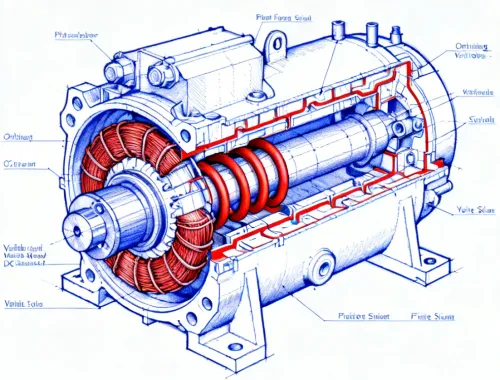
DC Inverter Compressor Drive
Conventional HVAC compressors operate in binary on/off cycles — drawing maximum power on each start and maintaining comfort only by overshooting and undershooting the set temperature. Mitsubishi Electric DC inverter compressors modulate continuously between 15% and 130% of nominal capacity in real time.
The result is a system that responds proportionally to the actual thermal load in the space: high-speed compressor operation when the building first starts heating on a cold morning, ramping back to minimum speed once temperature stabilises. This eliminates the 4–6× power spikes of conventional start cycles and reduces wear on the compressor mechanism.
33.1 Maximum seasonal efficiency rating
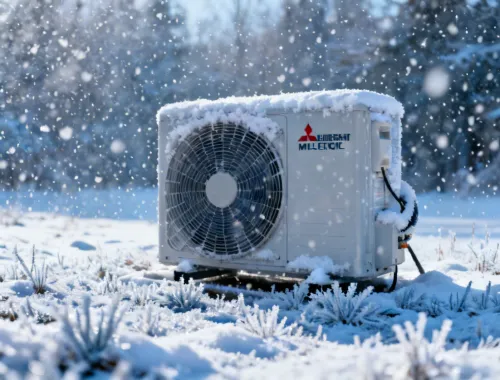
Hyper-Heating H2i — Cold Climate Performance
Standard air-source heat pumps lose significant capacity as outdoor temperatures fall — a fundamental limitation of the refrigeration cycle. Mitsubishi Electric's Hyper-Heating H2i addresses this through three simultaneous engineering interventions:
-
01
Enhanced Vapour Injection (EVI): A flash tank intercooler injects additional refrigerant vapour into the mid-stage of the compression process, dramatically increasing heating capacity at low ambient temperatures without exceeding safe compressor operating limits.
-
02
Dual Defrost Algorithm: Adaptive demand-based defrost cycles minimise the frequency and duration of defrost events (when the unit temporarily switches to cooling mode to melt outdoor coil frost) from a fixed-timer approach to an intelligent sensor-driven protocol.
-
03
Low-Ambient Optimised Expansion Valve: Electronic expansion valve sizing tuned for low-pressure differentials at sub-zero ambient conditions, maintaining refrigerant flow rates that conventional EEV designs cannot sustain.
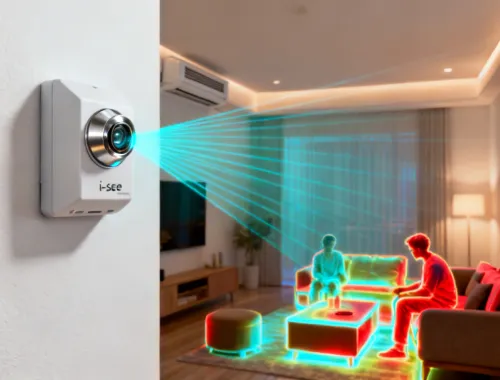
i-see Sensor® — Adaptive Occupancy Intelligence
The i-see Sensor is a 3D scanning infrared sensor array built into compatible wall-mounted indoor units. It continuously maps the thermal signature of occupants in the room to achieve three distinct functions:
Directs airflow toward where people are located — not just sweeping air across the entire room uniformly.
When a person is sitting directly below the unit, the sensor redirects airflow to the sides to prevent discomfort from direct air exposure.
Automatically shifts to a wider temperature setpoint band when the room is vacant, reducing energy consumption by 15–22% without user intervention.
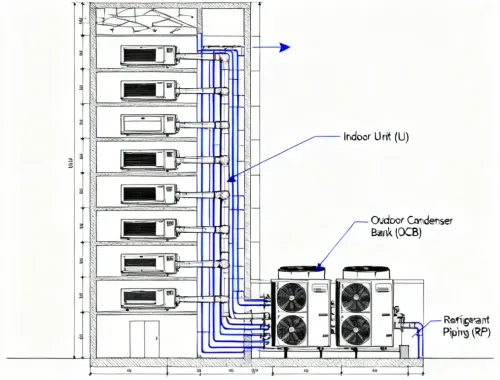
City Multi VRF — Heat Recovery Architecture
City Multi Variable Refrigerant Flow with R2/Y-Series heat recovery represents the current engineering state of the art for commercial multi-zone climate control. The fundamental innovation is a three-pipe refrigerant distribution system (high-pressure liquid, high-pressure gas, low-pressure gas) that allows the outdoor unit's refrigerant circuit to serve simultaneous heating and cooling demands.
Zones requiring cooling reject heat into the refrigerant circuit; zones requiring heating extract it. When internal loads are in balance, the outdoor compressor runs at a fraction of the capacity it would need if all zones were served independently — a thermodynamic efficiency multiplier with no analogous technology in conventional chilled-water systems at this scale.
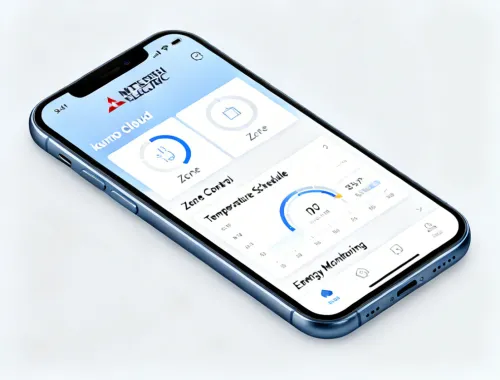
kumo cloud® — Connected System Intelligence
kumo cloud is Mitsubishi Electric's Wi-Fi enabled control platform for residential and light commercial applications. Via the kumo cloud app (iOS and Android), users control individual zone temperatures, set weekly schedules, monitor real-time energy consumption, and receive maintenance alert notifications from anywhere in the world.
- ◆ Works with Amazon Alexa, Google Home, and Apple HomeKit
- ◆ Geofencing triggers pre-conditioning 30 min before arrival
- ◆ Energy reporting with zone-level consumption breakdown
- ◆ kumo sensor accessory adds room CO₂ and humidity monitoring